
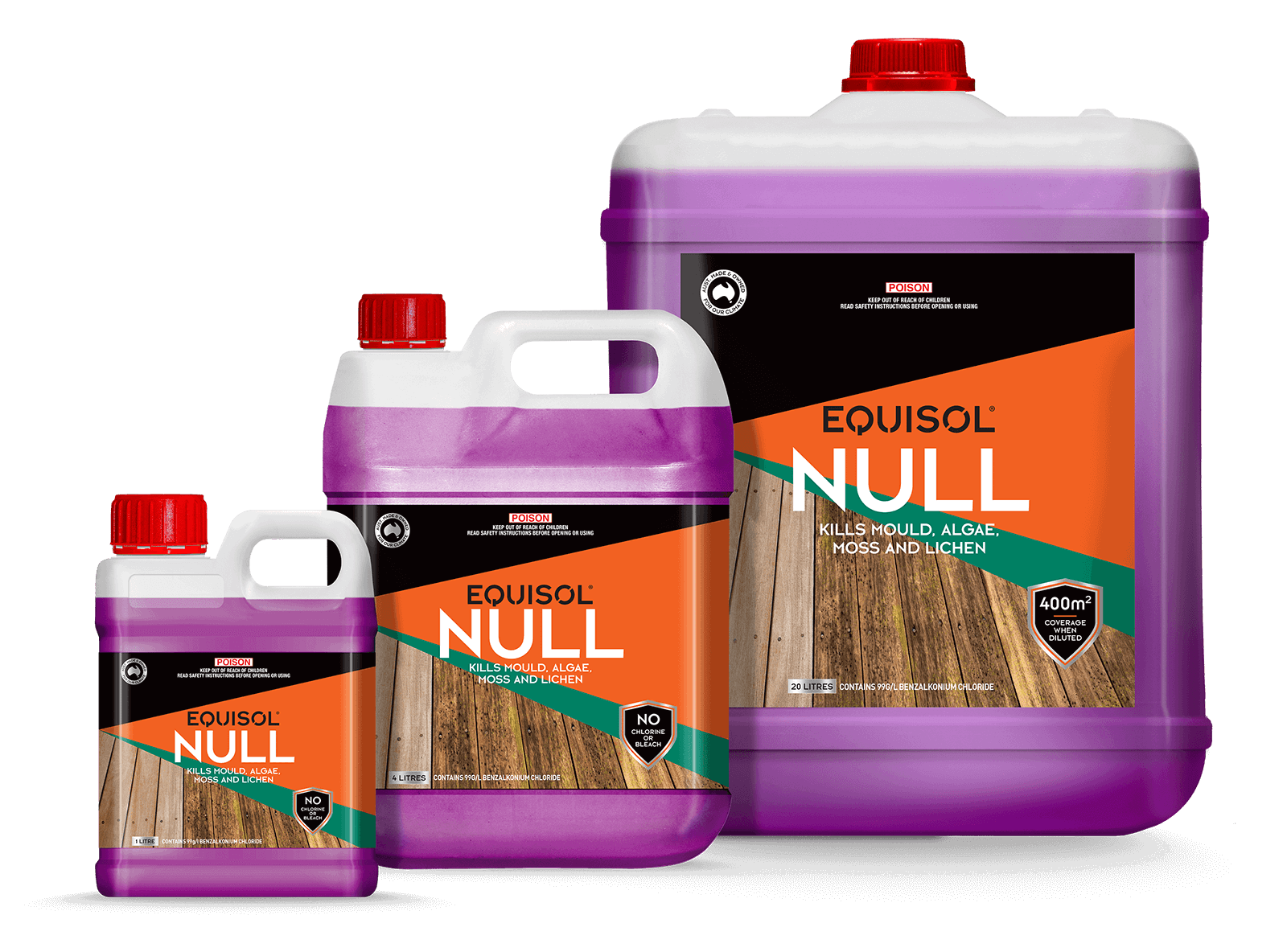


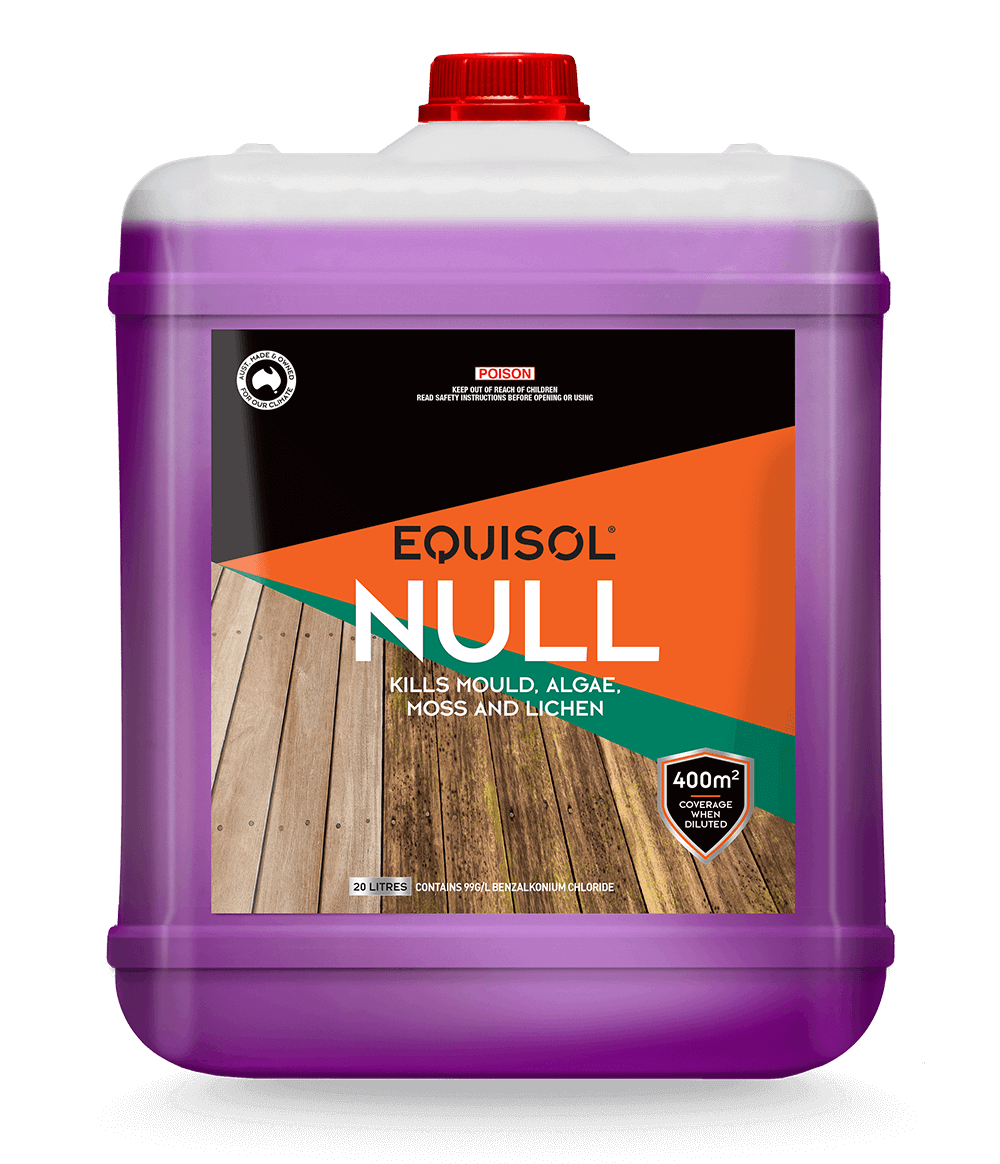


Equisol Null
Kills mould, algae, moss and lichen.
Advanced formula penetrates to deep rooted spores on many surface types.
Purpose-made to kill bacteria, mould, algae, moss and lichen. Low toxicity, biodegradable and environmentally responsible. When using on timber, follow up with Equisol Prime and Equisol Vitalise to fully prepare for oiling.
Equisol Null is suitable for surfaces including timber, concrete, steel, roof tiles, fibre cement and internal walls. Surfaces coated in paint or poly-urethane film coatings need to be stripped and sanded first.
| Timber Prep System |
New timber |
Mould present |
Paint or old film coating |
Grey & weathered with no coating |
Old oil coating in poor condition |
Re-coating Equisol |
Regular Cleaning |
| Equisol Strip/Xcoat | Step 1 | ||||||
| Equisol Null | Step 1 | ||||||
| Equisol Prime | Step 1 | Step 2 | Step 2 | Step 1 | Step 1 | Step 1 | |
| Equisol Vitalise | Step 2 | Step 3 | Step 3 | Step 2 | Step 2 | Step 2 | |
| Equisol Retaine | Step 1 | ||||||
| Timber is ready to coat with Equisol Pro E365 | |||||||
Sweep surface and wash down with water. Mask areas not to be cleaned, as Null may damage other coatings.


Null FAQs
Plasterboard, timber, concrete, steel, roof tiles, fibre cement, internal walls, composite timber and many other surfaces. With no staining or discolouration.
Chlorine and bleach (sodium hypochlorite) can cause discolouration, stains, etching, and even damage to wood surfaces. The most common issues are uneven lighter patches; where the bleach or chlorine has literally bleached the wood! Soft timbers like cedar or pine are very vulnerable. Equisol Null is based on benzalkonium chloride, which will not affect the colour or texture of your timber.
No, which makes it ideal for cleaning and coating surfaces as a barrier against future mould growth, especially white plasterboard walls.
Yes, when used with Equisol Prime. Composite timber can be highly susceptible to mould. Using chlorine, bleach or other caustic cleaners can permanently stain the products colour. Use Equisol Prime to gently clean mould off composite timber. Then use Equisol Null’s strong biocide to minimise the return of mould, algae, lichen and moss.
Keep your timber clean and oiled. Accumulated dirt on your timber deck helps mould spores to germinate, so regular cleaning will minimise mould’s ability to grow. A good timber coating, such as Equisol Pro E365, which includes mouldicides, will also inhibit mould growth. Re-oiling your deck in a regular maintenance cycle will also limit mould. Once mould has a good foothold, it is very hard to remove.
Surface mould can hold moisture that accelerates water decay in timber, known as wet rot. Surface mould also creates ideal conditions to attract wood-decay fungi, which can do serious damage to timber structures by breaking down the lignin and cellulose that give timber its strength.
If your timber feels spongy where there was surface mould, then you have a problem, and the wood structure has already started to fail.
No. There are many different types of mould, but the really dangerous one is toxic black mould (stachybotrys chartarum). Confusingly, there is also a non-toxic black mould, called common black mould which is mainly harmless and easy to clean off. Toxic black mould can also be green, and has a characteristic smell of wet soil, rot and decay. It produces mycotoxins that can lead to respiratory issues, allergies, skin irritations, and other health problems. Toxic black mould should be removed immediately, especially in poorly ventilated or frequented areas such as indoors. Equisol Null will remove toxic black mould.
Yes. We also recommend applying Null as a protective barrier on the surface to minimise the mould’s ability to return.
Mould spores are always present in nature. Many Australian trees carry mould spores invisible to the naked eye, which become airborne and settle on your exterior timber. A small amount of moisture can trigger germination and mould growth. Timber is also hygroscopic, meaning it absorbs moisture from the air and attempts to balance its moisture content. Typically your timber will have around 15% moisture, even on a dry day. So it doesn’t take much for mould spores to germinate.
Film coatings are usually only applied to the top surface of timber decking, leaving the other three sides vulnerable to moisture and mould. Mould also thrives in poorly ventilated areas like underneath your deck, where it can enter the timber and eventually rise to the surface, under the film coating. Film coatings can also trap water more than oil coatings, due to surface cracks and untreated areas like edges. This accelerates mould growth, especially around cut ends and deck fixtures.
Oil coatings can minimise mould growth through regular maintenance and cleaning. Equisol Pro E365 penetrating oil includes mouldicides and algaecides to limit mould growth. If mould does appear on your timber, it is far easier to remove on oiled surfaces than on surfaces with a film coating.
Mould can affect all timbers, including Accoya, other acetylated timbers, CCA timbers and thermally modified timbers. Wood is naturally porous, with capillaries that pull moisture out of the air, allowing mould to grow on the surface and to penetrate beneath where it is difficult to remove. In Australia, blackbutt timber is susceptible to black spot mould, which can sit deep in the timber and come out over time. Soft woods like pine are also very susceptible. Composite timbers are a known problem for attracting mould.
Both incidences can happen. Mould spores are constantly in the air and settling on your exterior timber, where they can germinate with a little moisture and begin to grow. Regular cleaning will limit their growth. Mould can also already be present deep inside the timber, even from reputable timber yards, and come to the surface over time with the right damp conditions. This type of mould is particularly hard to remove, as most cleaning solutions cannot reach that deep.
Yes, We highly recommend using Null to clean mould, algae, lichen or moss off your surface, and then re-applying Null and leaving it to dry. It will act as a barrier to minimise mould spores from germinating. The dried Null barrier can be coated with penetrating oils, stains, water-based oils, poly-urethane film-forming coatings, interior or exterior house paints, and many other products without discolouration.
Re-apply Null and leave to dry as a barrier minimising future mould growth. Oil over the top.
Mould spores commonly bury deep into timber where cleaning solutions cannot reach. Removing mould from the surface does not kill the buried spores, which then come back to the surface when damp conditions are right. This is why mould re-appears. It is almost impossible to remove mould from timber without excessive treatment, such as thermally modified or acetylated timber. We recommend re-applying Null to the cleaned timber and leaving it to dry, before oiling over the top. The Null coating acts as a barrier to minimise any future growth.
You may also need
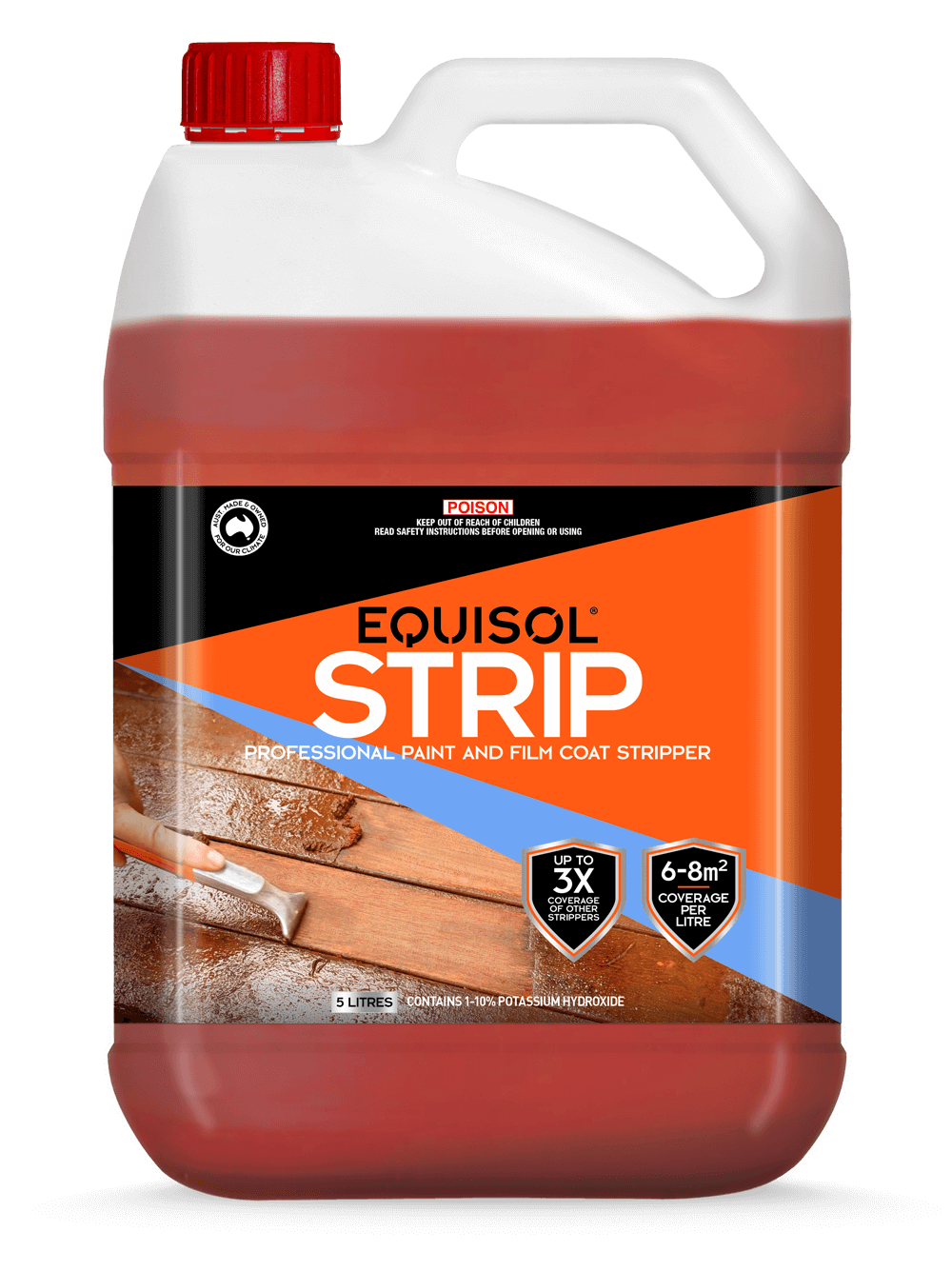
Equisol Strip
Removes film coatings including paint, poly-urethane timber finishes and most solvent based finishes as well as old built-up oil coatings.
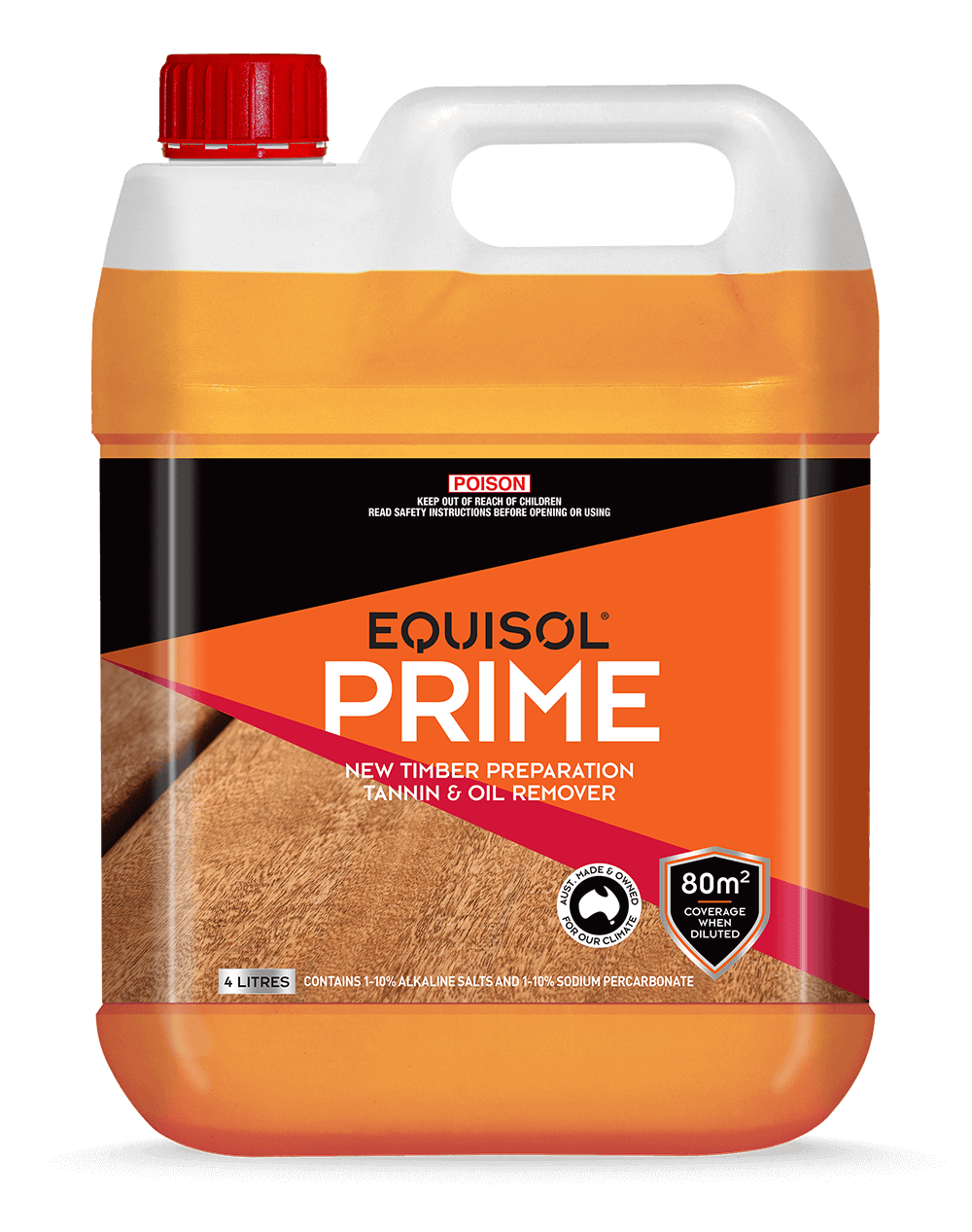
Equisol Prime
Prepares new and unseasoned timber for coating or removes old oil coatings.
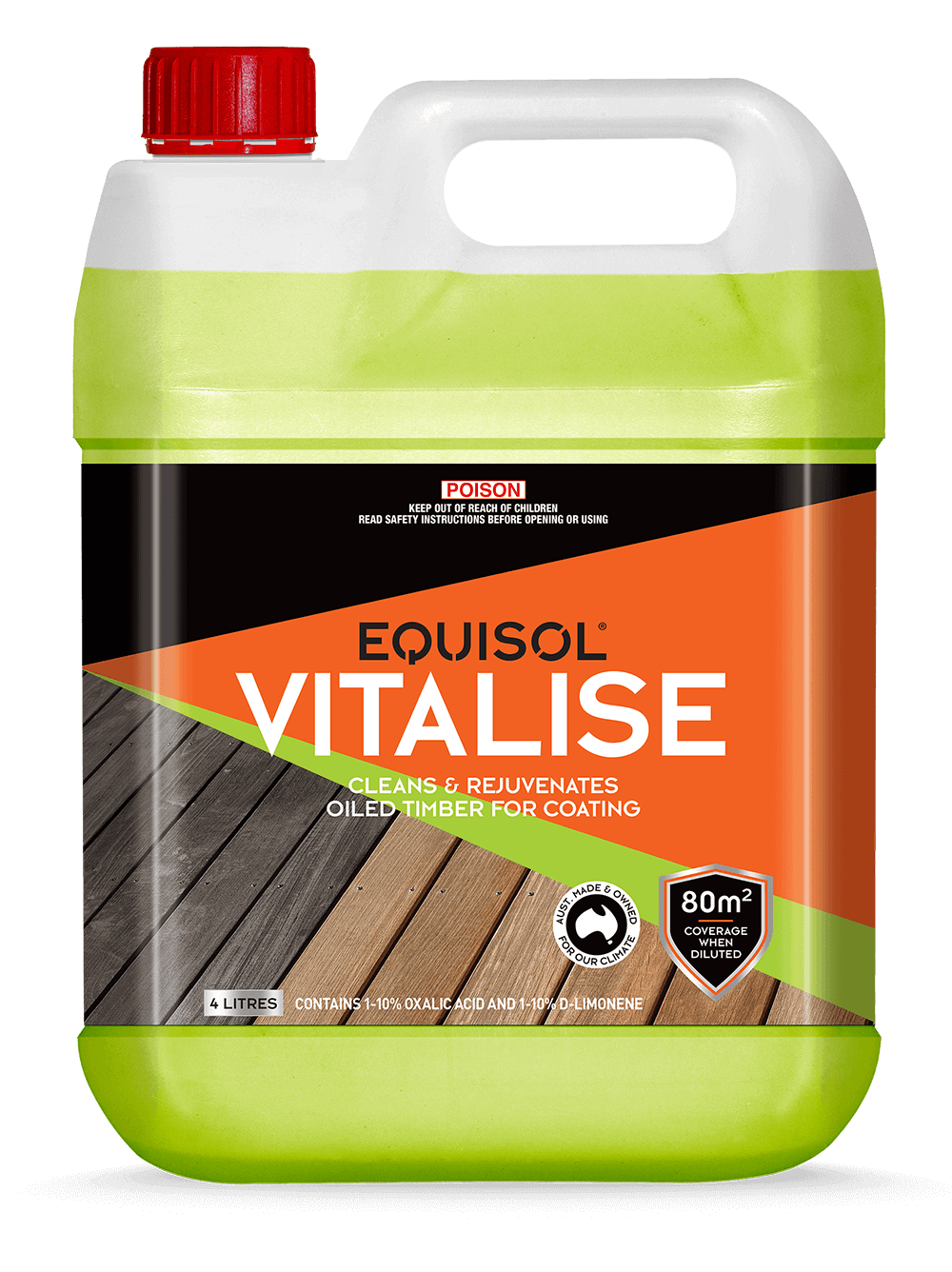
Equisol Vitalise
Rejuvenates, cleans and brightens exterior timber before coating.
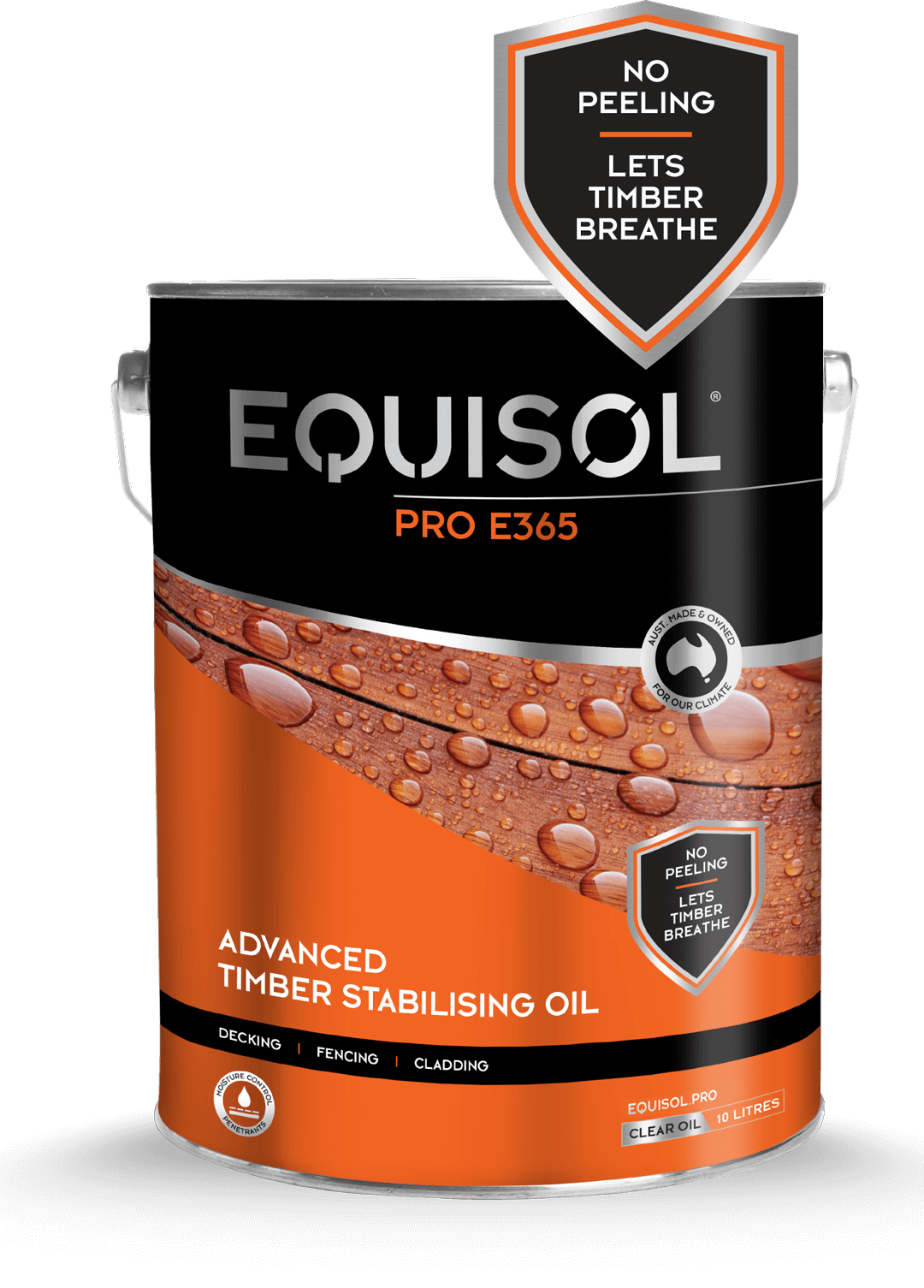
Equisol Pro E365
Penetrating, non-film forming, clear exterior timber oil.
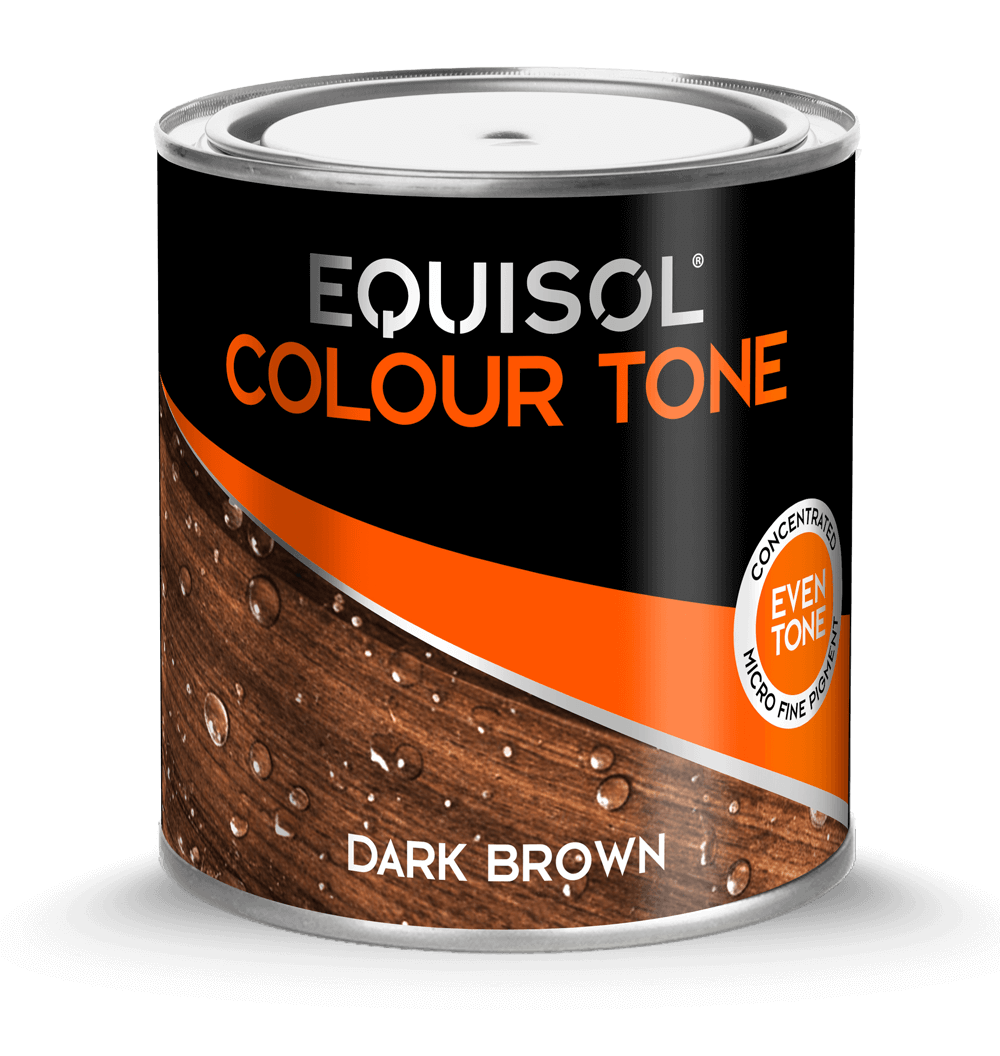
Equisol Colour Tones
Enhance natural exterior timber character and delay silvering. Mix in by hand.